Your Curls Are a Mess Because Nobody Told You the Truth
Start here. This is the only guide you need.
You have probably already ruined your curls at least twice trying to fix them.
You found a YouTube tutorial. You bought the products. You followed the steps. Your hair looked right for one day and then went back to exactly what it was before, except now you had spent forty euros on a gel that smells like synthetic lavender and does absolutely nothing.
This is not a you problem. This is a context problem. Most curly hair content on the internet is either trying to sell you something, built around a method that has not been updated since 2001, or written for someone with different hair than yours.
Sometimes all three.
Let us fix that.
First: Your Hair Is Structurally Different, Not Broken
Curly hair is not straight hair that refuses to cooperate. It is a different structure with different needs, and the reason it is always dry is not because you are doing something wrong. It is physics.
Because curly strands spiral and bend, the natural oils your scalp produces physically cannot travel down the shaft the way they do on straight hair. The oil slides straight down a straight strand.
On a curly one, it gets trapped at every bend. Your scalp may be fine. Your ends are in a drought.
This is why every curly hair product leans hard on moisture. It is compensating for a structural gap that exists regardless of what you do.
The One Thing That Actually Matters Before You Buy Anything
Forget curl type for now. The 2A to 4C system is useful for finding inspiration online. It tells you almost nothing about what products will work for you.
The thing that tells you what products will work for you is porosity.
Porosity is how easily your hair absorbs and holds moisture. It is determined by the cuticle layer, which is the outer layer of each strand, made up of overlapping keratin cells arranged like tiles on a roof. When those tiles lie flat and tight, moisture struggles to get in and out. That is low porosity. When those tiles are lifted or damaged, moisture floods in and floods back out. That is high porosity.
How to test it in thirty seconds
Mist clean, dry hair with water and watch what happens. If water beads up, you have low porosity.
If it absorbs in a few seconds, medium. If it vanishes almost instantly, high. Skip the float test. It is not reliable.
Why does this matter? Because the products that fix high-porosity hair will destroy low-porosity hair, and vice versa. If you skip this step, you are just guessing.
Low porosity: use lightweight water-based products. Avoid heavy butters and oils. Your hair is not absorbing them. They are just sitting there.
High porosity: go rich and heavy. Shea butter, castor oil, thick creams. Your hair loses moisture fast and needs sealing on every wash day.
The Internet Lied to You About the Curly Girl Method
If you have spent any time in curly hair communities, you have heard of the Curly Girl Method. No sulfates, no silicones, no heat, co-wash only, fingers only. It was created by a hairstylist named Lorraine Massey and published in a book in 2001.
Parts of it are genuinely useful. A lot of it has not aged well.
IAT-certified trichologist Sophia Emmanuel puts it plainly: co-washing, which means using only conditioner to clean your hair, does not actually clean your scalp. Oil, dirt, product residue and dead skin cells accumulate. That buildup can cause dandruff, itching, and over time even hair loss. Your scalp needs to be washed. The Curly Girl Method got so focused on moisture that it forgot about scalp health entirely.
The current expert consensus treats CGM as a starting point, not a rulebook. Use a sulfate-free shampoo regularly. Clarify once a month with something stronger. Accept that water-soluble silicones are fine. Use a Denman brush if it works for you. Add protein treatments when your hair needs them.
The method was written more than twenty years ago. You are allowed to update it.
The Five Steps That Actually Work
Step 1: Wash your scalp.
Focus sulfate-free shampoo on the scalp, not the lengths. Massage with fingertips for at least one minute. Rinse and let the suds pass through the rest on their own. Once a month, use a clarifying shampoo to clear buildup properly.
Step 2: Condition with time.
Apply from mid-lengths to ends and leave it on for at least two to five minutes. Do not rush this. The technique that works best for most people is squish-to-condish: flip your head over, cup handfuls of water, and scrunch upward repeatedly until your curls start clumping and you can hear them squishing. It forces water and conditioner into the cuticle together.
Step 3: Detangle in the shower.
Always detangle while conditioner is in, working from ends up to roots. Never the other way. A wide-tooth comb for the initial pass, then a Denman brush or fingers to define. Once the conditioner is out, your window for easy detangling is over.
Step 4: Style on soaking wet hair.
This is the step most beginners get wrong. Products go on dripping wet hair, not damp. Damp hair means you already lost most of your water. Work leave-in through wet sections first, then cream or gel on top. Scrunch upward to encourage curl formation.
Step 5: Leave it alone.
Diffuse on low heat or air dry. Do not touch your hair until it is completely dry. Not mostly dry. Completely dry. Touching curls while they are drying breaks the film that gel forms around each strand, and that film is what gives you definition instead of frizz.
The gel cast
Gel forms a solid polymer film around your curls as it dries.
That shell (the crunch) holds definition, blocks humidity, and seals in moisture. Once dry, scrunch gently upward to break the cast and release soft, bouncy curls.
Do not panic when it first dries hard. That is working correctly.
Sleep on Silk. Clarify Monthly. Repeat.
Two things most beginners skip that make a significant difference: sleeping protection and clarifying.
A cotton pillowcase absorbs your hair's natural oils and product, creates friction that lifts cuticle cells, and causes frizz by morning regardless of how perfectly your wash day went.
Switch to silk or satin. It is a one-time purchase and it works.
Clarifying means using a stronger shampoo (not your sulfate-free daily wash) to strip accumulated product, hard water minerals, and buildup from your strands once every three to four weeks.
If your curls feel limp, coated, or stop responding to products, you need to clarify. Follow it immediately with a deep conditioning treatment to restore moisture.
If You Are Just Starting Out

Pink Sea Women’s Premium Sweatshirt
This classic crew-neck sweatshirt is an essential basic for anyone’s wardrobe. The ribbed cuffs on the sleeves and waist are reinforced, and the high-quality cotton ensure that you’ll enjoy this cuddly and cool sweatshirt for many moons to come.- Reinforced sleeves & waist cuffs
- Raglan sleeves, crew neck with triangle
- Combed cotton for long durability
- Smooth quality fabrics 8.3 oz
- Material: 80% cotton, 20% polyester (heather: 85% cotton, 15% rayon)
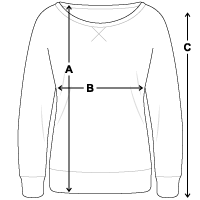
| A | B | C | |
|---|---|---|---|
| S | 25.59 inch | 18.11 inch | 28.94 inch |
| M | 26.38 inch | 18.9 inch | 30.12 inch |
| L | 27.17 inch | 19.69 inch | 30.91 inch |
| XL | 27.95 inch | 20.47 inch | 31.69 inch |
| 2XL | 28.74 inch | 21.65 inch | 32.48 inch |
| 3XL | 0 inch | 0 inch | 0 inch |
You do not need fifteen products. You need three: a sulfate-free shampoo, a conditioner with enough slip to detangle, and a strong-hold gel.
That is the full starter kit. Everything else comes after you understand how your hair responds.
If you want the full picture with ingredient science, porosity-specific routines, product chemistry, and a drugstore kit for every budget and texture, that is what the guide is for.