How to Write Articles That Actually Build an Audience Online
The engagement principles behind Medium's algorithm, and why they apply everywhere.
Most writing advice for content creators focuses on the wrong end of the problem. It tells you to publish more, post at optimal times, use the right hashtags, and engage with your niche.
These things are not useless. They are just downstream of a more fundamental question: when someone actually reads what you wrote, do they finish it?
That question sounds simple. The answer shapes everything else about whether your writing builds an audience or disappears into the feed.
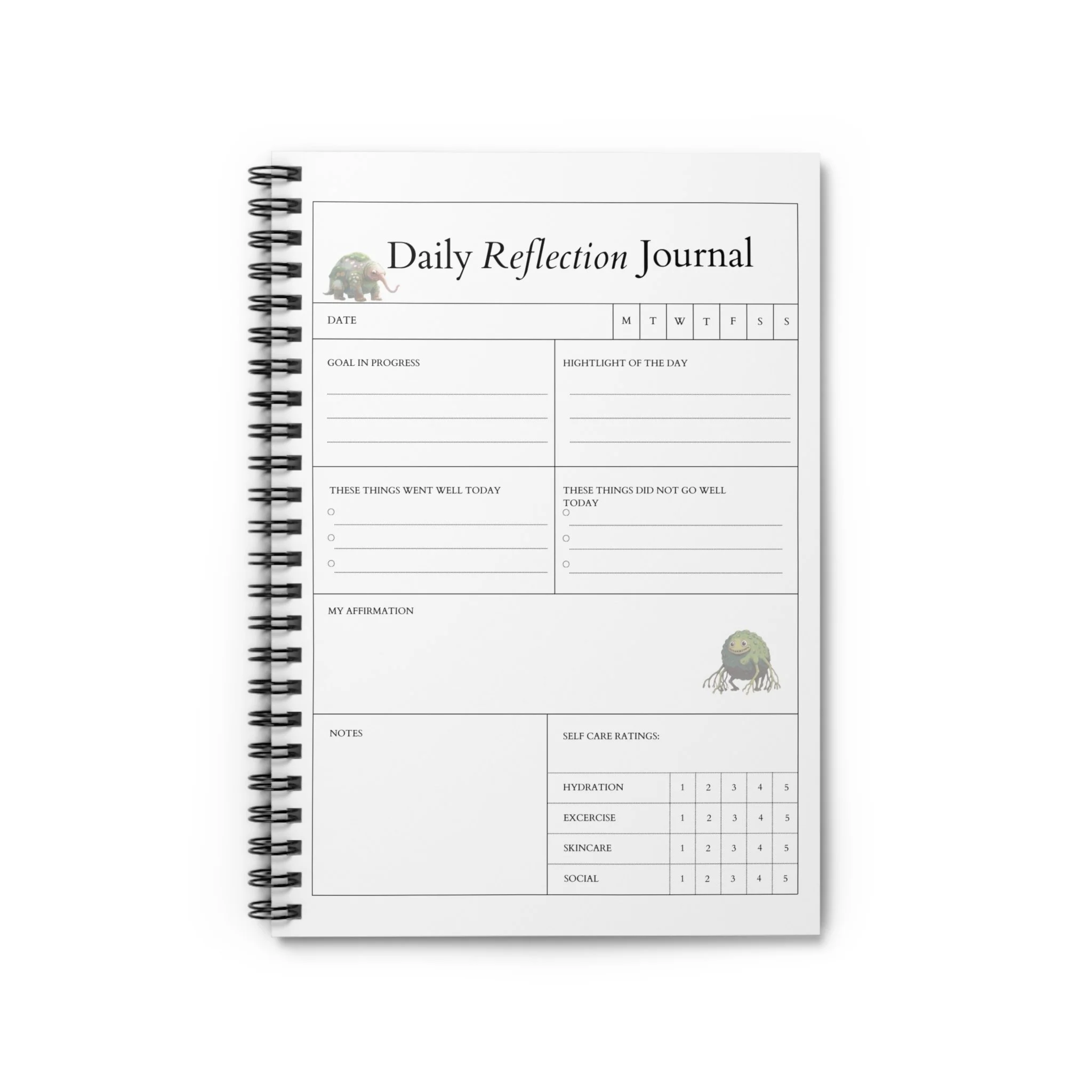
Daily Reflection Journal — Spiral Ruled Notebook for Gratitude, Goals & Wellness Tracking
A compact spiral notebook designed for daily reflection and mindful tracking. The ruled 90gsm pages offer smooth, reliable writing for notes, goals, and small reflections. With a printed front cover and a dark grey back cover, it looks tidy on a desk or tucked into a bag. The metal spiral binding lays flat for easy writing and allows pages to be removed cleanly. An inside back document pocket keeps loose notes or receipts organized while the 6" x 8" size makes it portable without sacrificing space for thought. Thoughtfully structured pages help users capture intentions, track small wins, and reflect on the day in bite-sized entries.
Product features
- 118 ruled pages (59 sheets) of 90gsm paper for smooth writing
- Metal spiral binding that lays flat and allows easy page removal
- Document pocket on inside back cover for receipts or loose notes
- Sturdy 350gsm covers with front print and dark grey back cover
- Compact 6" x 8" size — portable and desk-friendly
Care instructions
- Use a soft, clean and dry cloth to gently brush any dust or dirt off from the center of book outwards.
Why engagement depth matters more than reach
Every major content platform now weights engagement depth over raw reach. On Medium, this is called read ratio. On YouTube, it is watch time. On newsletters, it is scroll depth and click-through.
The mechanics differ but the principle is the same: the algorithm is trying to answer one question on behalf of its users. Was this worth the time?
When a reader stops halfway through your article, that signal travels back to the platform's recommendation engine.
Enough of those signals and the platform stops recommending your work, regardless of how frequently you publish or how well your headlines perform. Read ratio is not just a quality metric.
It is a distribution lever.
The opening paragraph is a retention decision
The most common structural mistake in online writing is an opening that explains what the article is going to be about rather than immediately being about it.
By the time a reader finishes a paragraph that begins with 'In today's fast-changing world' or 'As a writer, I have always believed,' they have already learned that the article is not confident enough to start in the middle of the thought.
Strong openings name something specific. They identify a tension, a misconception, or a concrete problem that the reader is already holding.
They do not warm up. They start where the reader already is.
The reader's first question is not 'what is this about?' It is 'is this going to be worth my time?' Answer that in the first two sentences.

"The Gang" Women's Premium Sweatshirt
A cozy premium crewneck that says "The Gang" in bold, playful lettering—whether it's your ride-or-die crew, the chaotic friend group chat, your found family, or just a sly nod to being part of something unbreakable. The clean, centered graphic keeps it versatile: streetwear cool for casual days, subtle enough to layer, and meaningful to those who get it.
This slim-fit sweatshirt hugs in all the right places while staying soft and durable—perfect for coffee runs, movie nights, group hangs, or when you want to rep your people without trying too hard. Raglan sleeves and triangle neck reinforcement add smooth comfort and mobility, while the reinforced ribbed cuffs and waist keep everything looking sharp wash after wash.
Key Features:
Premium 80% cotton / 20% polyester blend (heather: 85% cotton / 15% rayon) – ultra-soft, smooth, and breathable
Midweight 8.3 oz fabric – cuddly warmth without bulk
Reinforced ribbed cuffs at sleeves and waist – hold shape and resist stretching
Raglan sleeves + crew neck with triangle reinforcement – enhanced comfort and durability
Combed cotton for long-lasting softness and pill resistance
Size Guide (approximate in inches – slimmer women's fit):
S: Length 28.94 | Chest 25.59 | Waist 18.11
M: Length 30.12 | Chest 26.38 | Waist 18.9
L: Length 30.91 | Chest 27.17 | Waist 19.69
XL: Length 31.69 | Chest 27.95 | Waist 20.47
2XL: Length 32.48 | Chest 28.74 | Waist 21.65
3XL: Not available (custom check recommended)
A premium essential for anyone who knows the best stories are the ones you live with your gang. Comfy, cute, and quietly loyal.
Structure is not formatting
Subheadings, bullet points, and short paragraphs make an article scannable. They do not make it hold attention.
Attention is held by forward momentum, the feeling that each paragraph is taking the reader somewhere they could not have reached without reading the one before it.
The most reliable way to create this is to write in a single straight line from the problem you opened with to the payoff you are building toward.
Every paragraph should either deepen the reader's understanding of the problem or move them toward the resolution.
Paragraphs that do neither are where readers stop.
Why editing is the underrated part of the craft
Most writers treat editing as error correction. The more useful frame is that editing is where you find out what the article actually is.
A first draft contains the argument plus everything the writer needed to write in order to discover the argument. The job of editing is to remove the scaffolding and leave the structure.
A practical test: read your draft and mark every paragraph that could be removed without the reader noticing a gap.
If they would not notice, the paragraph is not earning its place. This is not about cutting for brevity. It is about cutting for integrity. The article should not contain anything the reader does not need.
Consistency versus frequency
The standard advice for building an audience online is to publish as frequently as possible. The logic is exposure: more content means more opportunities to be discovered.
This is true in some contexts. In algorithm-driven environments, it can work against you.
Platforms that track engagement history learn what to expect from each writer. A consistent record of high-engagement articles trains the algorithm to distribute your work widely.
A record of frequent low-engagement articles has the opposite effect. The math usually favors publishing less and editing more, especially early in building a presence.
Topic selection: specificity over breadth
The articles that build lasting audiences are almost always specific. Not specific as in narrow, but specific as in written from direct experience rather than assembled from research. Readers can tell the difference.
An article about a lesson you learned the hard way contains a texture that an article summarizing conventional wisdom cannot replicate.
The strongest starting point for any article is the question: what do I know from direct experience that someone earlier in my journey would have paid to understand?
That question reliably surfaces the kind of material that holds attention, because it is the kind of material that is genuinely hard to find elsewhere.
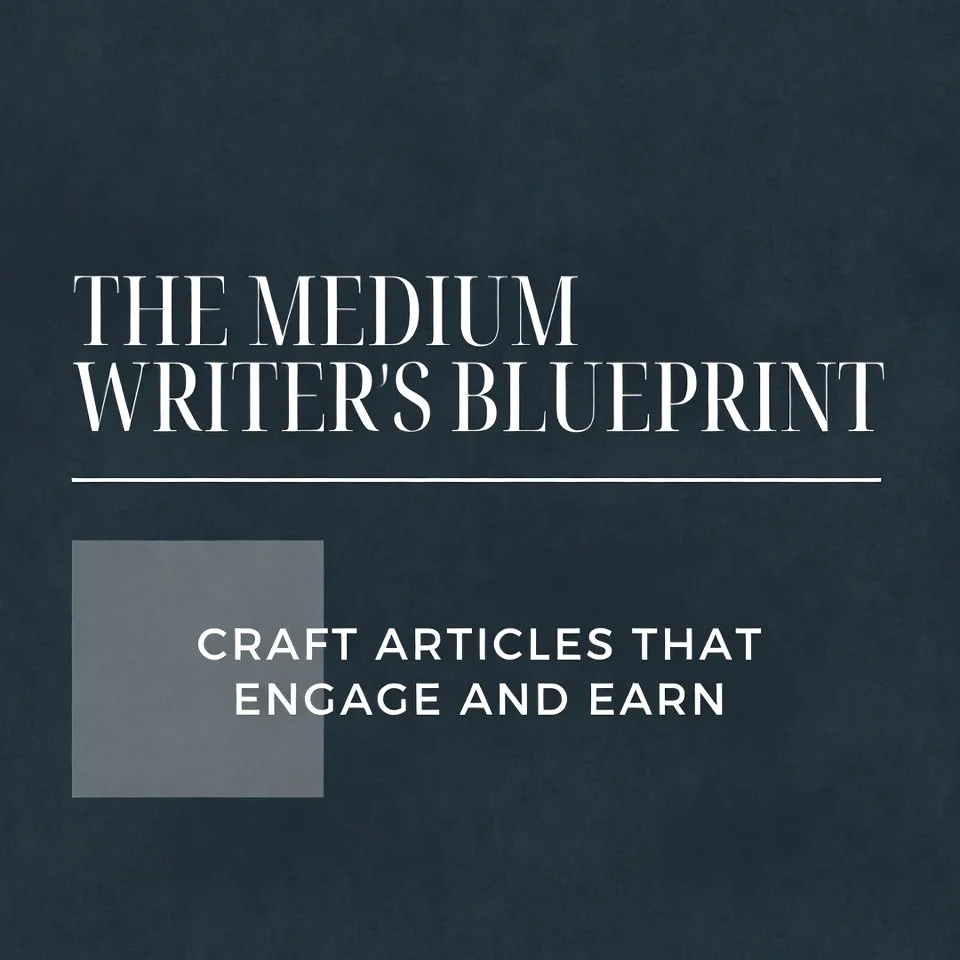
The Medium Writer's Blueprint applies these principles specifically to the Medium platform, including read ratio strategy, publication submissions, and a post-mortem method for learning from every article.