
Salicylic acid & all of it’s uses
Salicylic acid is commonly framed as an acne ingredient. That description is accurate, but it understates its scope. As a beta hydroxy acid, salicylic acid is oil soluble, which allows it to penetrate into pores rather than acting only on the surface. This article explains both conventional and overlooked uses, with emphasis on restraint and skin tolerance.
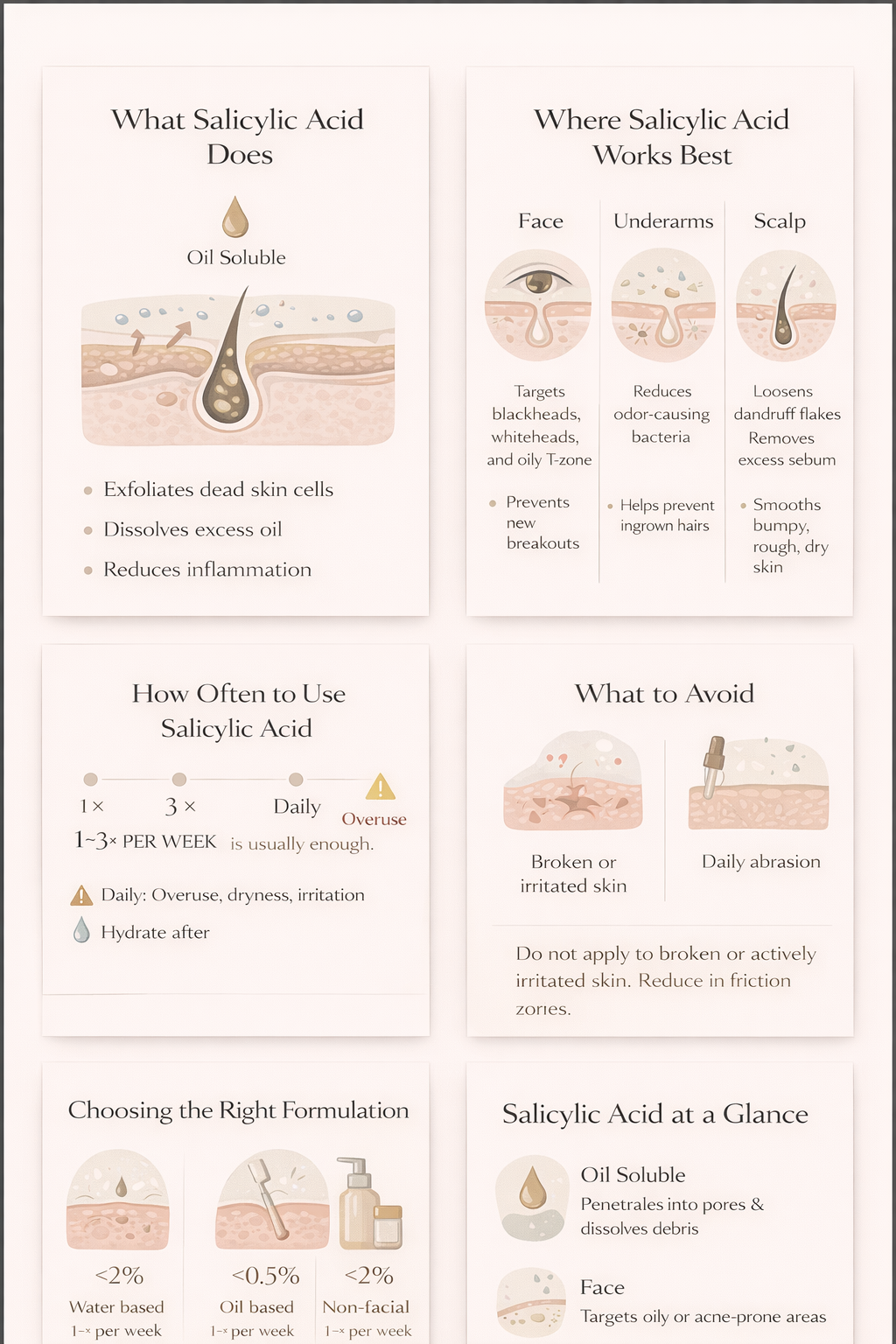
What salicylic acid does
Salicylic acid breaks down the bonds between dead skin cells and dissolves compacted oil.
It reduces inflammation and limits the growth of bacteria that contribute to odor and breakouts.
Unlike physical exfoliation, it works without abrasion, making it precise when used correctly.
Facial use
On the face, salicylic acid targets blackheads, whiteheads, and inflammatory blemishes. It is especially suitable for oily or combination skin.
With consistent but limited use, it improves texture, reduces congestion, and helps prevent new breakouts.
More is not better. Two to three applications per week are usually sufficient.
Underarm use
The underarm area benefits from salicylic acid for reasons unrelated to acne.It reduces odor by limiting bacteria that break down sweat. It helps prevent ingrown hairs by keeping follicle openings clear.
It can gradually improve uneven tone caused by friction and buildup. Use sparingly, no more than two to three times per week, and never immediately after shaving. Hydration afterward is essential.
Scalp use
On the scalp, salicylic acid acts as a controlled exfoliant. It loosens flakes associated with dandruff and seborrheic dermatitis. It breaks down product residue and excess sebum around hair follicles. It can reduce itching linked to low level inflammation. Scalp treatments should always be rinsed out and followed with a mild shampoo. Overuse can lead to dryness or rebound irritation.
Body use
Salicylic acid is effective on thicker or more resilient skin elsewhere on the body. Upper arms affected by keratosis pilaris often respond well to regular exfoliation.
Back and chest acne benefit from its ability to clear pores. Areas prone to rough buildup, such as feet, can become smoother with careful use. Body formulations are often lower in concentration to allow broader application without irritation.
What to avoid
Do not apply salicylic acid to broken or actively irritated skin. Avoid combining it with other strong exfoliants in the same area. Daily use on high friction zones increases the risk of barrier damage rather than improving results.
Choosing formulations
Simple formulations with clearly stated concentrations are preferable. Brands such as The Ordinary are often referenced because their products avoid unnecessary additives and make usage limits clear.
For non facial areas, reducing frequency is generally more effective than lowering the percentage.
Some Options
The Ordinary Salicylic Acid 2% Solution
Paula's Choice SKIN PERFECTING 2% BHA Liquid Exfoliant
THE ORDINARY Salicylzuur 2% Masque
The Ordinary | Salicylzuur 0,5% Body Serum
Underated Salicylic Acid 2% + Betaine 3% Face Serum with Horsetail Kemp & Witch Hazel