I Paid a Locksmith Eleven Times Before I Decided to Actually Learn Something
The eleventh time, the locksmith recognized me.
Not from my face. From my address. He pulled up on his little van, stepped out with his kit, and said, 'I remember this one,' before I could speak.
He picked the lock in forty-two seconds. I timed it. He was comfortable, unhurried, competent in the way that people are when they do something so often it has become entirely boring. I paid him ninety euros, watched him drive away, and stood in my own hallway feeling like the world's foremost expert on wasting both money and dignity. That evening I started reading about locks.
The Thing About Lock Picking Is That It Is Not What You Think It Is
I had the same mental image you probably have. Two thin pieces of metal. Frantic wiggling. Four seconds and a satisfying click. This image comes from every heist film ever made and it is, to put it charitably, incomplete.
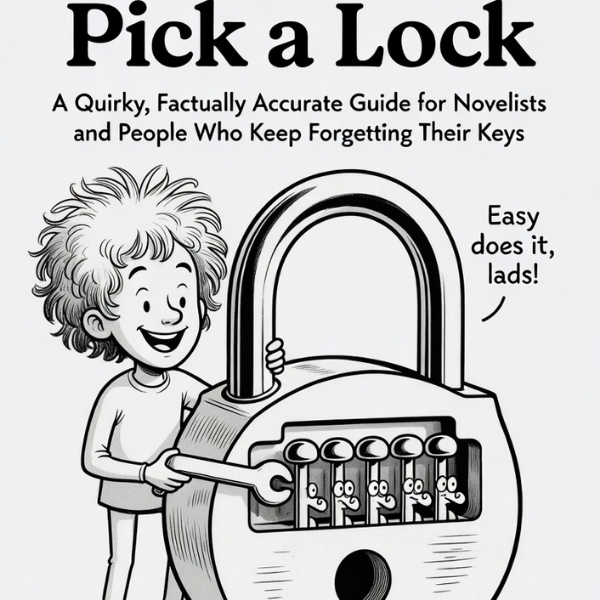
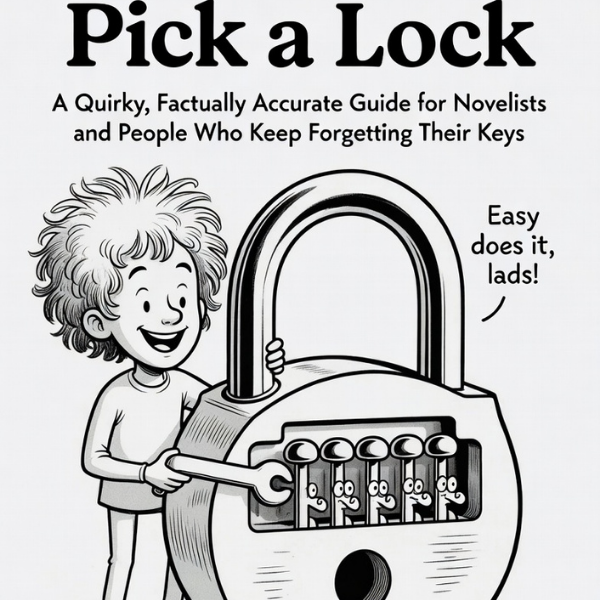
What I discovered was a mechanism so precise and so clever that the more you understand it, the more you appreciate both what locks do and what they cannot do. The pin-tumbler lock — the lock on your front door, almost certainly — is a small symphony of engineered friction. Five or six pairs of stacked pins, springs loaded above them, and a gap between two concentric cylinders called the shear line. The right key lifts every bottom pin by exactly the right amount so that every boundary between the bottom and top pins sits flush at that gap. Nothing interrupts the rotation. The lock opens.
To pick a lock without a key, you simulate this state manually. You apply the lightest possible rotational pressure to the inner cylinder — so light it feels like almost nothing, like the weight of a thought — and you wait for one pin to bind against the slight rotation. Then you lift that pin. Then you find the next one that binds. Then you lift that one. Each time a pin sets, the cylinder rotates by a fraction, and you feel it. You learn to hear the clicks.
You apply pressure so light it feels like the weight of a thought, and you wait for one pin to bind.
My first successful pick took eleven minutes. It was a cheap brass padlock I bought at a hardware store for six euros. I was sitting at my kitchen table at ten in the evening with a cup of tea and a beginner pick set that cost less than a single locksmith call. When the plug turned, I put the padlock down and stared at it for a moment.
The locksmith had been charging me ninety euros to do what I had just done with a nine-euro kit and forty-three days of occasional practice.
What This Has to Do With Writing
I am, among other things, a writer. And one of the things that kept me reading about lock picking — long after the practical utility was established — was how badly the craft is rendered in fiction.
The four-second film pick is one problem. But the deeper problem is the absence of texture. The writer does not know what the tension wrench feels like, so they skip it.
They do not know about binding order, so the protagonist's hands are vague and generic. They do not know that a Medeco Biaxial has rotating pins and a sidebar mechanism that makes standard picking techniques irrelevant, so the antagonist's high-security lock falls open like everything else.
Accuracy in technical detail is not pedantry. It is the thing that makes your reader trust you.
When a surgeon in your novel feels a particular resistance in the tissue and adjusts their approach, your reader — even without medical training — senses that the author knows something real. Lock picking works the same way.
The tension wrench detail, the false set on a spool pin, the difference between raking a cheap padlock and single-pin picking a Schlage deadbolt: these are the textures that separate a scene that reads as rehearsed from one that reads as lived.
On the Ethics of Knowing Things
I want to address something directly, because it comes up whenever this subject appears.
Understanding how locks work does not make you a burglar any more than understanding how cars work makes you a getaway driver.
The locksport community — which runs competitive picking events, open hardware nights, YouTube channels with millions of subscribers, and a subreddit with an explicit honour code — has been making this argument for years.
The knowledge itself is neutral. The application depends on the person.
In practical terms: every piece of information in this article, and in the guide I wrote, is freely available from locksmith training materials, academic security research, and the same YouTube channels your local locksmith learned from.
If someone is deterred from illegal entry by not knowing how locks work, they were not a very motivated criminal.
What changes when ordinary people understand lock mechanisms is that they make better decisions about which locks to buy, they stop paying emergency locksmiths ninety euros for forty-two-second jobs, and they write better fiction.
What I Eventually Made From All of This
I wrote a fifteen-page guide. It covers the four main lock types you will encounter in the wild and how to identify them in seconds, the complete pin-tumbler mechanism, the difference between raking and single-pin picking (and which fictional characters would use which method), security pins and false sets, real-world difficulty ratings across common lock brands, and a full toolkit breakdown from professional picks to the bobby-pin equivalent.
It is for writers who want accurate heist scenes and for people who have paid a locksmith one too many times. It is not for criminals. Criminals, statistically, kick doors.
The locksmith has not been back to my address. I consider this a reasonable outcome for everyone involved.