
BHA vs AHA differences explained
Which acid should you use. The real answer depends on how the acid behaves in the skin, not on trend or strength. BHAs and AHAs are fundamentally different substances designed to solve different problems.
Understanding that difference prevents over exfoliation and helps you choose with intent rather than guesswork.
What AHAs are
AHAs are alpha hydroxy acids. Common examples include glycolic acid, lactic acid, and mandelic acid. They are water soluble, which means they work primarily on the surface of the skin.
They loosen the bonds between dead skin cells on the outermost layer of the skin. This improves texture, brightness, and overall smoothness.
Over time, they can also help soften fine lines by encouraging surface cell turnover. AHAs are generally best suited for normal to dry skin, dull skin, and concerns related to uneven tone or texture.
What BHAs are
BHAs are beta hydroxy acids. In skincare, this category is almost entirely represented by salicylic acid. BHAs are oil soluble. This allows them to penetrate into pores rather than remaining on the surface. Inside the pore, they dissolve sebum, debris, and compacted dead skin cells. They also have anti inflammatory properties, which makes them especially useful for breakouts and irritation. They are most effective for oily or combination skin, clogged pores, acne prone areas, scalp buildup, and zones affected by sweat and friction.
Quick Side story
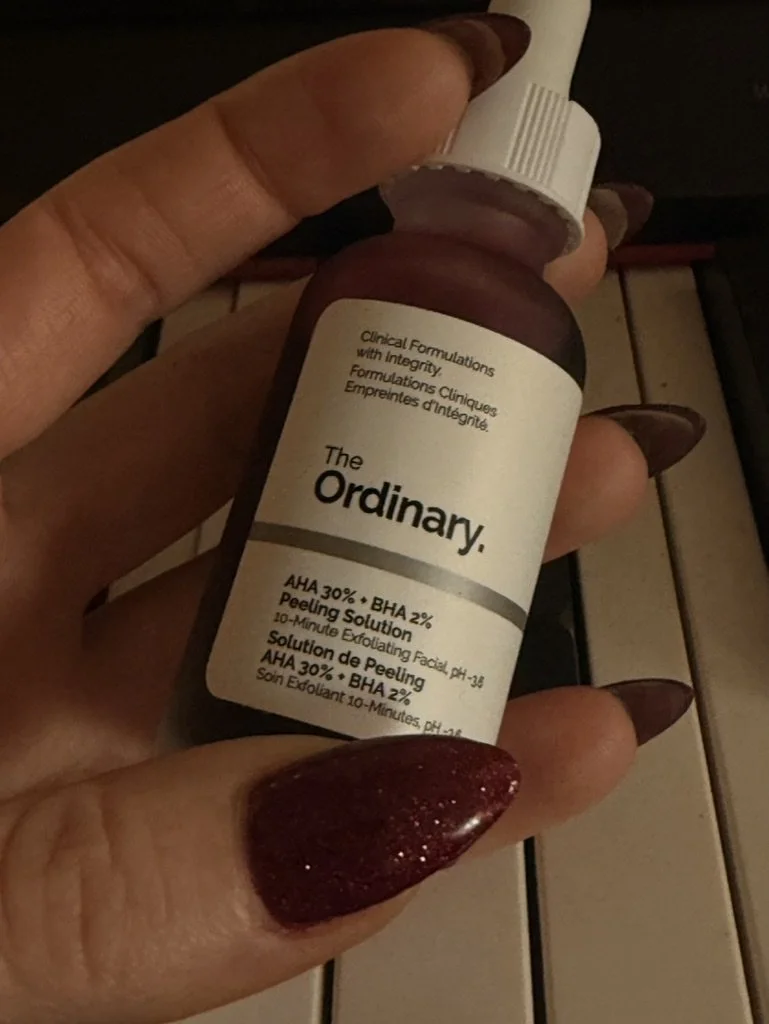
I recently bought The Ordinary AHA 30% + BHA 2% Peeling Solution, and the fact that it matched my nail polish was entirely accidental.
The purchase itself was deliberate. My skin looked dull and, at the end of a rough year, frankly worn. Tired in a way that reads as older rather than rested. I paired the peeling solution with Natural Moisturizing Factors + Beta Glucan, focusing on light surface hydration rather than heavy occlusion.
The result was immediate and visible. Cleaner texture, smoother skin, and a refreshed look that did not rely on redness or irritation to signal effectiveness. The skin looked awake rather than stripped.
Out of curiosity and for a crude but honest double check, I used the same combination on my boyfriend. The outcome was the same. Clearer, smoother skin with a noticeably fresher appearance.
For me, this pairing worked. Simple, controlled exfoliation followed by calm hydration. No excess. No drama.
Ten out of ten. I would recommend that combination without hesitation.
How they work differently
The key difference is solubility.
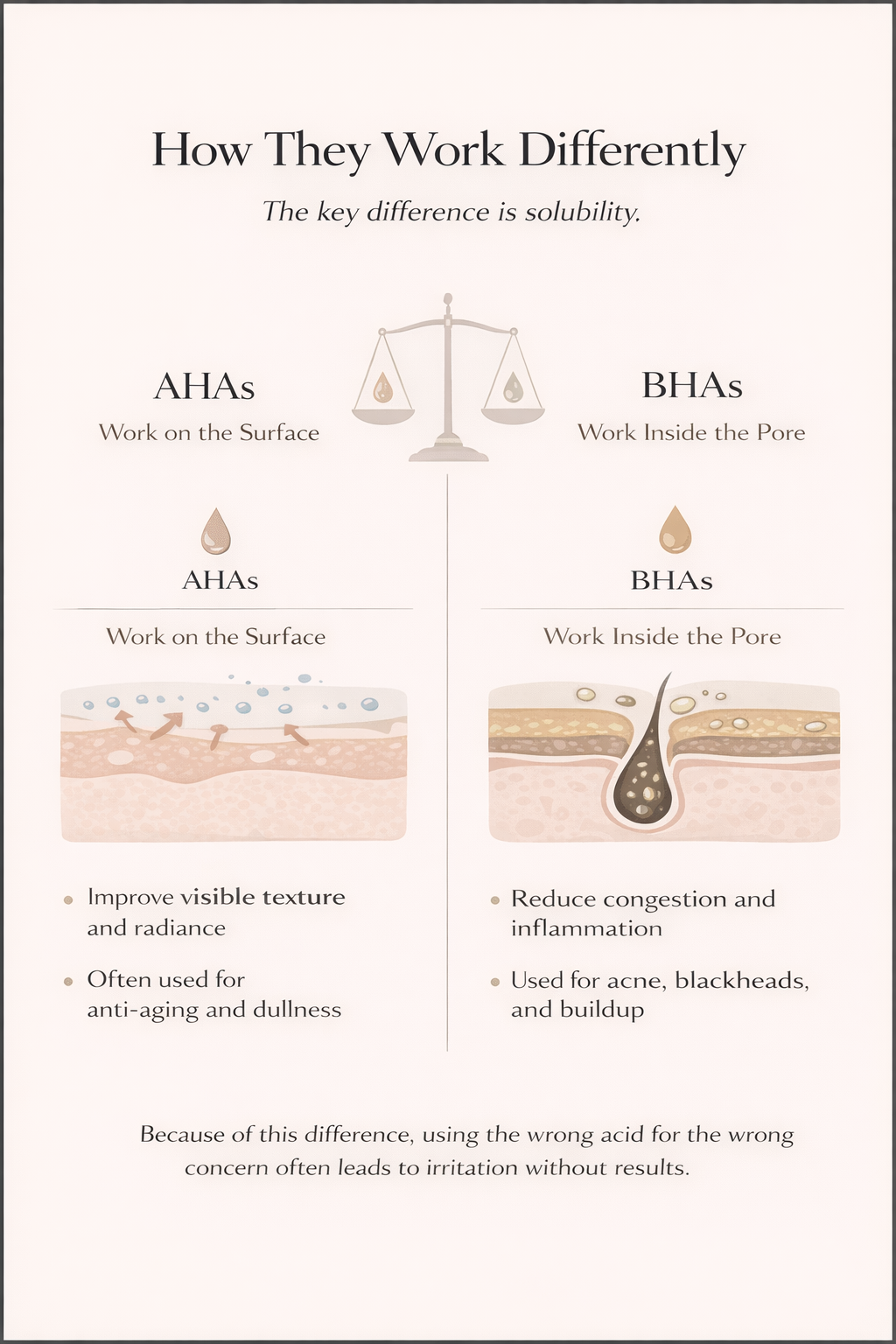
AHAs work on the surface.
BHAs work inside the pore.AHAs improve visible texture and radiance.
BHAs reduce congestion and inflammation.AHAs are often used for anti aging and dullness.
BHAs are used for acne, blackheads, and buildup.
Because of this difference, using the wrong acid for the wrong concern often leads to irritation without results.
Can you use both
Yes, but not at the same time in the same area. Using AHAs and BHAs together increases the risk of barrier damage.
Some routines alternate days. Others use AHAs on the face and BHAs on areas like the T zone or scalp. The key is separation and moderation.
More acids do not equal better skin.
Avoid daily use unless specifically formulated for it. Do not layer multiple exfoliating acids.
Do not apply acids to broken or irritated skin. Always support exfoliation with hydration and sun protection.
Choosing the right acid
Choose an AHA if your main concern is surface roughness, dullness, or uneven tone. Choose a BHA if you struggle with clogged pores, blackheads, breakouts, or buildup.
Products from brands such as The Ordinary are often referenced because they clearly label acid type and concentration, which makes informed choice easier.
Final thoughts
AHAs and BHAs are not interchangeable. They solve different problems in different layers of the skin.
When chosen correctly and used sparingly, they improve clarity and texture. When misused, they undermine the skin barrier. Understanding the difference is the difference between exfoliation and damage.