
The Downward Spiral of My Dark Vanessa: A Review
This book is a difficult read, because it consciously drags the reader into the same psychological labyrinth that entraps its protagonist, forcing confrontation with the ambiguity of consent and the long shadows cast by abuse. By the time I finished, the only honest response was relief.
Not because the book resolved anything, but because I could finally step out of Vanessa's head and trust my own judgment again.
Trigger warning: This article discusses child sexual abuse, grooming, graphic sexual content involving a minor, psychological manipulation, and long-term trauma. Reader discretion advised.
CONTAINS SPOILERS
I started the book and somewhere in those first chapters and felt myself go under. It was like taking a gulp of air before submersion, then emerging gasping when I finally closed it.
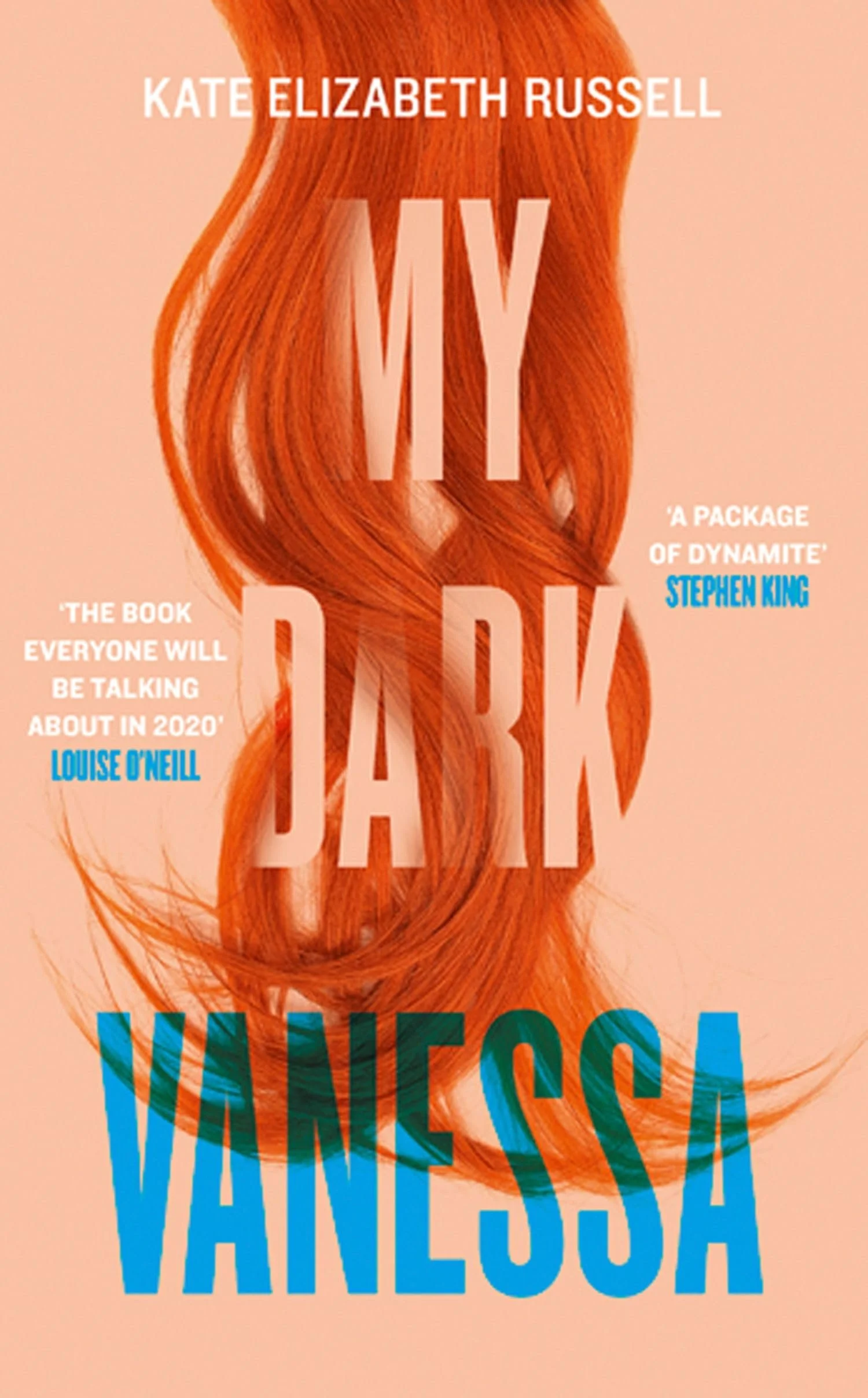
At its core the book tells what should be a familiar story — a fifteen-year-old girl, Vanessa Wye, becomes involved with her much older English teacher, Jacob Strane — but Russell does not present this as a neat tale of predator and victim.
Instead she uses a fractured dual timeline spanning Vanessa’s youth in 2000 and her early 30s in 2017.
That structure itself makes the novel difficult: the narrative shifts back and forth, mirroring the messy way memory works and refusing to let the reader settle into a single emotional frame.
Spiralling
The reason the book feels like a downward spiral is Vanessa herself. As an adult she recounts her past with a sense of loyalty and affection for Strane that many readers find uncomfortable or even repellent. She is what critics call an unreliable narrator, someone whose insistence on framing the experience as love rather than abuse keeps the reader off-balance. We are pulled into her confusion, her rationalizations, her echoes of romantic language even as the reality of what happened becomes increasingly clear.
Most fiction about sexual abuse gives readers distance: the hurt is observed, the villain is visible, and the victim’s awakening is a moment of clarity. My Dark Vanessa refuses that simplicity. The reader watches a character both defend and dismantle her own denial. Every flicker of insight is paired with a retreat into fantasy or justification.
Part of what pulls the reader into this spiral is how thoroughly Russell embeds you in Vanessa’s interior world. There are no reassuring editorial distances, no commentary that tells you what to feel. Instead you experience Vanessa’s impulses, her shame, her sensual memory, and her desperate need to believe in her own agency. The psychological complexity is not an accident. Russell weaves literary allusions — notably to Lolita — into the narrative as a way of exploring how culture has conditioned assumptions about desire, power, and blame.
Another reason the book is difficult is the relentless examination of the legacy of trauma. Vanessa’s adulthood is not a healing arc in a conventional sense but a battleground of memory and identity. When another former student forces public attention on Strane’s pattern of abuse, Vanessa is caught between resisting the narrative of victimhood and confronting the truth of her own harm.
Intermezzo: You and the trap of persuasive delusion
My Dark Vanessa reminded me of the feeling I had near the end of the Netflix series You. Not because the stories are similar, but because of the same moral disorientation.
With Joe Goldberg, I felt unsettled by how easily his manipulation started to make emotional sense. I remember a specific moment in season one where Joe is narrating his decision to follow Beck home, framing it as protective concern rather than stalking.
For a few seconds, before I caught myself, I thought: he has a point. That snap back to clarity felt like waking up from something.
With My Dark Vanessa, that pull was even stronger, because it works from the inside out. I wasn’t under the sway of the abuser, but of Vanessa herself.
Of the story she tells herself in order to survive. Her insistence that she is fine, that what happened was chosen or justified, becomes strangely persuasive.
What makes this so effective is the precision of the writing. Vanessa repeatedly returns to small, seemingly neutral details to anchor her version of events.
The way she recalls gifts, private jokes, or moments framed as tenderness creates a logic that feels coherent while you are inside it. Nothing overtly monstrous happens in her own telling.
I caught myself more than once accepting her reasoning for a paragraph or two before an external detail snapped me back. The cycle of absorption and revulsion returned so often it eventually became unbearable. The story does not invite you to look away. It holds you there, uncomfortable and complicit, until the last page.
Reception and Controversies
Many describe the book as suffocating, emotionally draining, and impossible to read casually. Not because it lacks momentum, but because it feels intrusive.
Readers often mention needing breaks, feeling unsettled, or finishing the novel in a haze of conflicting emotion.
Critics note that the novel functions less as a story than as an experience. It refuses to guide the reader toward moral certainty or emotional release. Online discussions return again and again to the same uneasy point. Knowing Vanessa was abused does not prevent the reader from momentarily accepting her framing. That gap between knowledge and feeling is what many identify as the novel’s most disturbing achievement.
The absence of a redemptive arc is often emphasized as well. The ending offers no catharsis, only a kind of emotional accuracy. Vanessa does not arrive at clarity. She remains caught in the same patterns, aware and unaware at the same time.
Similar Books
Tampa by Alissa Nutting. Even more confrontational, told from the predator’s perspective. It removes all ambiguity and forces the reader to sit with revulsion and clarity at the same time.
Lolita by Vladimir Nabokov. Not because of the subject alone, but because of the rhetorical trap. The language seduces while the reality remains indefensible, much like Vanessa’s internal logic.
A Little Life by Hanya Yanagihara. Different structure, same endurance test. Trauma, self-justification, and the long shadow of abuse told without relief.